

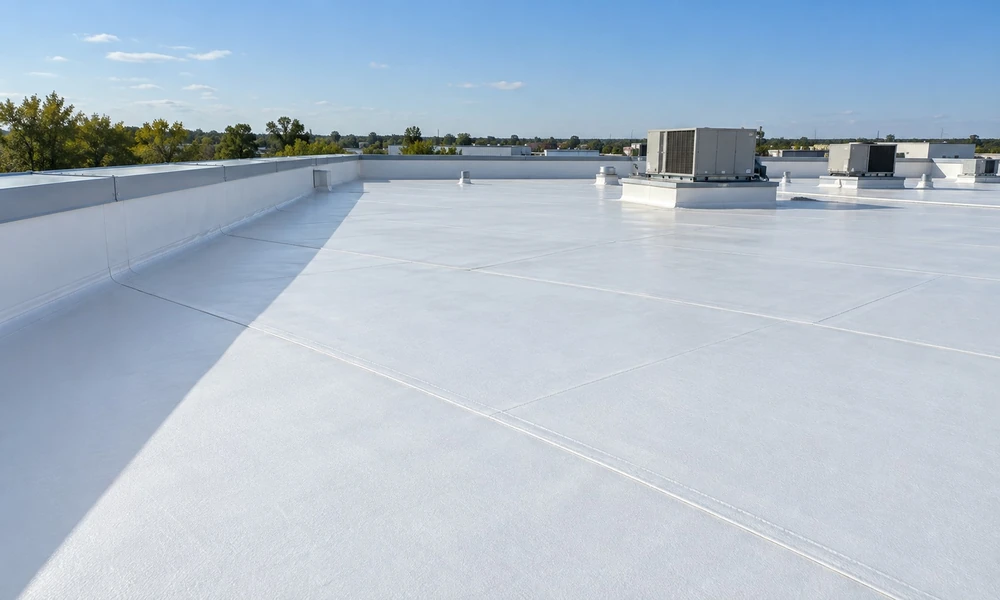
Owners often ask us how to identify their commercial roof before they call anyone for bids. The answer starts with a safe look around, and sometimes a professional cut test or core sample. From the ground, you can often tell whether you’ve got a single-ply membrane, modified bitumen, built-up asphalt, metal panels, or an older roof that’s been coated. Even so, people mix up the names all the time.
White welded sheets with a fabric-like texture near the seams usually mean TPO or PVC. Dark, rubbery sheets may be EPDM. Rolls with granules on top point to modified bitumen. Shiny or painted ribs mean metal, and a thick roof covered in gravel may be built-up. A coating can hide what was there first. That’s why adhesion tests and core samples matter before any repair work.
Why does it matter? Your repair, coating, and replacement options all depend on what’s under there. A coating that sticks to one surface may peel off another. Fastener patterns and insulation type also change how a tear-off gets planned. That’s the practical reason to learn how to identify my commercial roof type early.
Don’t walk an unfamiliar commercial roof without fall protection and a good reason to be up there. A licensed contractor can document the roof type, slope, drains, and any wet areas for you.
Snap photos of labels on leftover rolls, metal paint codes, and old permit cards in the building files. Those clues help a lot when a coating hides the first roof. Share them with the roofing crew before the site visit, and the question of how to identify my commercial roof gets answered a lot faster.
RoofElite identifies and documents commercial roof systems in Lutz and nearby markets. License CCC1335486. Call (833) 553-5483 or start with RoofElite.
