


In the relentless march towards industrial efficiency that defines Singapore’s economy, a parallel but largely invisible process unfolds daily: the systematic removal of the residues, contaminants, and accumulated detritus that modern manufacturing and logistics inevitably produce, making industrial cleaning in Singapore not merely a service industry but an essential ecological function within the artificial ecosystem of factories, warehouses, and processing plants. Like decomposers in a forest clearing away fallen leaves and dead wood to allow new growth, industrial cleaning operations prevent the build-up of materials that would, if left unchecked, bring production to a grinding halt, corrode expensive infrastructure, and pose serious risks to the workers who navigate these industrial landscapes daily.
The Contamination Profile of Modern Industry
To understand why industrial cleaning in Singapore has evolved into such a specialised field, consider what contemporary industrial processes leave behind. Modern manufacturing generates an astonishing array of residues: petroleum-based lubricants that resist simple water cleaning, metallic particulates from precision machining, chemical compounds with properties ranging from merely sticky to genuinely hazardous, and the omnipresent dust that Singapore’s tropical humidity transforms from a nuisance into an adherent coating on every exposed surface.
The Building and Construction Authority’s guidelines for industrial facility maintenance acknowledge this complexity, noting that different industrial sectors produce characteristically different contamination patterns. A pharmaceutical plant accumulates fine particulate matter and biological residues that require sterile cleaning protocols. A shipyard generates welding slag, paint overspray, and metallic debris. A food processing facility must contend with organic residues that, in Singapore’s warm climate, can rapidly become breeding grounds for bacteria and pests. Each contamination type demands specific remediation approaches, transforming industrial cleaning into an applied science rather than simple janitorial work.
The Safety Imperative
The emphasis on safety in industrial cleaning in Singapore reflects hard lessons learned across decades of industrial development. The Ministry of Manpower’s workplace accident statistics tell a sobering story: inadequate facility maintenance, including insufficient cleaning, contributes to slip and fall incidents, equipment malfunctions, and exposure to hazardous materials. The Workplace Safety and Health Act now mandates comprehensive safety protocols for industrial cleaning operations, particularly those involving confined spaces, work at heights, or handling of toxic substances.
Consider the seemingly straightforward task of cleaning an industrial storage tank. What appears simple becomes complex when examined closely. The tank may contain residual chemicals that become hazardous when mixed with cleaning agents. The enclosed space requires proper ventilation to prevent accumulation of toxic fumes or oxygen depletion. Workers must use appropriate personal protective equipment and follow strict entry procedures. Professional industrial cleaning in Singapore providers train extensively in these protocols, understanding that shortcuts can have fatal consequences.
The Workplace Safety and Health Council reports that “proper cleaning and maintenance of industrial facilities significantly reduces workplace accidents and improves overall operational safety,” underscoring how cleaning transcends mere tidiness to become integral to worker protection.
Efficiency Through Expertise
The efficiency component of industrial cleaning in Singapore stems from accumulated knowledge about what works in specific situations. Years of trial and refinement have produced optimised approaches for different contamination types and facility configurations. This expertise manifests in multiple ways:
Equipment Selection and Deployment
Professional providers maintain arsenals of specialised equipment, each tool suited to particular applications:
- Ultra-high-pressure water systems for removing concrete deposits and stubborn scale
- ATEX-certified vacuum systems safe for explosive atmospheres in chemical plants
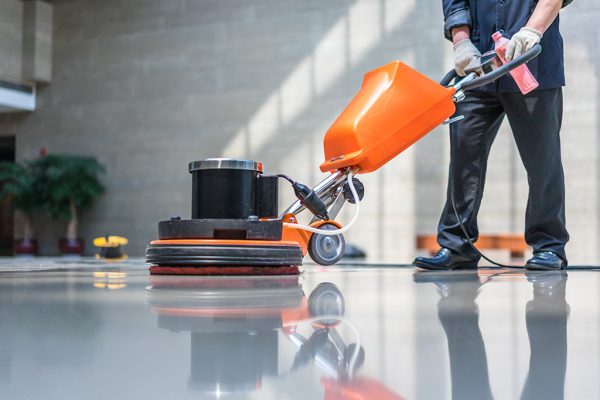
- Automated floor scrubbers that clean thousands of square metres with minimal water consumption
- Dry ice blasting equipment that cleans without generating secondary waste streams
- Robotic systems for accessing dangerous or difficult locations
Chemical Knowledge
The National Environment Agency strictly regulates industrial cleaning chemicals, requiring proper handling and disposal. Efficient industrial cleaning in Singapore demands understanding which formulations effectively remove specific contaminants whilst minimising environmental impact. Alkaline cleaners for organic residues, acidic solutions for mineral scale, enzymatic products for biological contamination, each serves distinct purposes.
Timing and Scheduling
Industrial facilities operate under intense production pressure. The Economic Development Board notes that Singapore’s manufacturing sector contributes substantially to GDP, making downtime extremely costly. Efficient industrial cleaning occurs during planned maintenance windows, often overnight or during weekends, requiring providers to work rapidly and reliably.
Reliability in Service Delivery
Reliability distinguishes professional industrial cleaning in Singapore from improvised alternatives. Industrial facility managers cannot afford service providers who arrive late, lack proper equipment, or fail to complete work as promised. The consequences extend beyond inconvenience into significant financial losses and safety risks.
Reliable providers demonstrate several key characteristics. They maintain redundant equipment to handle breakdowns. They employ trained workers who understand industrial environments and follow safety protocols consistently. They carry appropriate insurance coverage, protecting clients from liability should accidents occur. They maintain documented procedures that ensure consistent quality regardless of which crew performs the work.
The Singapore Manufacturing Federation emphasises that “reliable maintenance partners, including cleaning service providers, form essential components of successful industrial operations,” recognising that manufacturing excellence depends on numerous supporting services functioning flawlessly.
The Environmental Dimension
Singapore’s commitment to environmental sustainability, articulated in the Sustainable Singapore Blueprint, extends to industrial cleaning practices. The National Environment Agency requires that contaminated wastewater from industrial cleaning undergoes proper treatment before discharge. Modern industrial cleaning in Singapore increasingly adopts water-recycling systems, biodegradable cleaning agents, and waste minimisation strategies that align with national environmental goals.
This environmental consciousness represents an evolution in thinking. Earlier industrial cleaning focused solely on removing contamination efficiently. Contemporary practice recognises that the cleaning process itself must minimise ecological impact, treating wastewater properly, reducing chemical usage, and preventing secondary pollution.
The Invisible Foundation
Singapore’s industrial landscape, from the petrochemical complexes on Jurong Island to the pharmaceutical plants in Tuas, depends fundamentally on the systematic, professional application of safe, efficient, and reliable industrial cleaning in Singapore that maintains these facilities in functional condition, enabling the continuous production that sustains the nation’s economy.
