

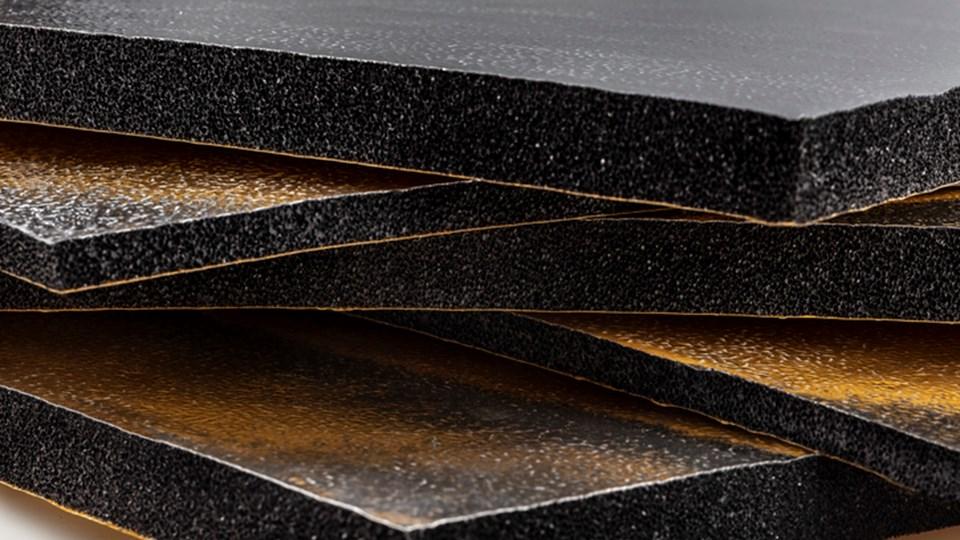
What does sound insulation mean? This is a question that can be answered in many different ways, depending on the context. In general, though, it refers to materials or techniques used to block or absorb sound in order to improve the quality of acoustics in a particular space. This can be important for both residential and commercial buildings, as well as other types of spaces like recording studios. There are a variety of products and methods available for sound insulation, so anyone considering it should do their research to find the best option for their needs.
- Sound insulation is the process of absorbing or reflecting sound waves in order to reduce the amount of noise that enters a space.
Sound waves are created when an object vibrates, and they travel through the air until they reach our ears. However, noise pollution can be a major problem in both residential and commercial spaces. Sound insulation is the process of absorbing or reflecting sound waves in order to reduce the amount of noise that enters a space.
Acoustic panels are one common type of sound insulation, and they are often used in recording studios and concert venues. baffles, Helmholtz resonators, and absorption materials can also be used to reduce noise levels. In addition, soundproofing is a related process that seeks to block out all noise, rather than just reducing it. While complete silence is usually not possible, soundproofing can create a much quieter environment.
- There are two main types of sound insulation: absorption and reflection.
When it comes to soundproofing a room, there are two main approaches: absorption and reflection. Absorption involves using materials that absorb sound waves, such as insulation, acoustic tiles, and thick curtains. Reflective materials, on the other hand, bounce sound waves back into the room. Common reflective materials include hard surfaces like glass and metal.
Both absorption and reflection can be effective in reducing noise levels, but the best results are usually achieved by using a combination of both methods. By absorbing some of the sound waves and reflecting others back into the room, it is possible to create an effective barrier against unwanted noise.
- Absorption occurs when sound waves hit a surface and are converted into heat, while reflection occurs when sound waves bounce off a surface.
Anyone who has ever shouted at a hard surface knows that sound is a type of energy that travels through the air in waves. When these waves hit a surface, they can be either absorbed or reflected. Absorption occurs when the sound waves are converted into heat, while reflection occurs when the waves bounce off the surface.
Both of these processes are important in determining how we hear sounds. For example, a room with hard surfaces will have a lot of reflection and will therefore be very loud, while a room with soft surfaces will be much quieter. By understanding how absorption and reflection work, we can better control our environment and create spaces that are more conducive to hearing.
- Sound insulation can be used to reduce noise pollution in both indoor and outdoor spaces.
Although it is often invisible, sound plays a vital role in our everyday lives. It can help to create a sense of space and atmosphere, and it can also be used to convey information and emotional cues. However, too much sound can be overwhelming and even harmful to our health. Noise pollution is a serious problem in both indoor and outdoor spaces, but it can be mitigated through the use of sound insulation.
By absorbing or reflecting sound waves, insulation can help to reduce the overall level of noise in a space. In addition, insulation can also help to reduce echoes and reverberation, further improving the acoustic quality of a space. As a result, sound insulation is an effective way to reduce noise pollution in both indoor and outdoor spaces.
